
Searching for paint protection film installers near me usually means you are already serious about protecting your vehicle.
The next step is choosing the right shop, film, and coverage package.
That matters because paint protection film is not simply a product. Its performance and appearance depend on the film, surface preparation, pattern selection, installation environment, installer judgment, and long-term care.
If you want to understand the technology before comparing installers, the complete APS Paint Protection Film Guide explains PPF construction, installation, coverage, maintenance, aging, removal, warranties, and cost.
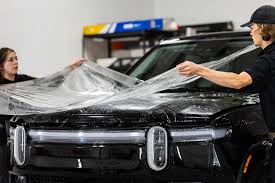
Why the PPF Installer Matters
Paint protection film must be positioned, aligned, conformed, secured, and finished correctly.
A technically advanced film installed poorly can still produce a disappointing result.
A qualified installer understands both the material and the vehicle. That includes recognizing complex body lines, managing film tension, selecting appropriate patterns, treating edges carefully, and knowing when a particular panel or paint condition requires a different approach.
When comparing PPF installers, look for experience, clean installation practices, careful preparation, documented film products, and a shop that can explain its recommendations clearly.
Look for a Shop That Clearly Explains Coverage
Not every vehicle needs the same level of PPF coverage.
Some drivers want targeted protection for the highest-impact areas. Others want more comprehensive coverage for long-term preservation.
Common PPF coverage areas include:
- Front bumper
- Partial or full hood
- Partial or full front fenders
- Mirror caps
- Door edges and handle cups
- Rocker panels
- Rear-wheel impact areas
- Rear bumper loading areas
- Full painted surfaces
Package names are not universal. Ask the installer to identify the exact panels, coverage boundaries, seams, and anticipated edge treatment in writing.
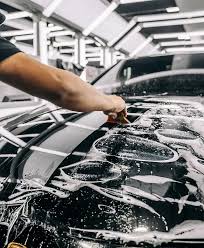
Understand Partial-Front and Full-Front Coverage
Partial-front coverage generally includes the front bumper and leading sections of the hood and fenders.
This can reduce initial cost but may leave visible film edges across the hood and fenders.
Full-front coverage generally protects the front bumper, full hood, full front fenders, and mirror caps.
Full-panel coverage avoids partial-film lines and protects the surfaces receiving the greatest concentration of road impacts.
The right choice depends on the vehicle, budget, expected road exposure, and how sensitive the owner is to visible chips or film edges.
Ask About Vehicle Preparation
Surface preparation is a major part of a professional PPF installation.
Dirt, wax residue, road film, bonded contamination, polishing residue, and existing paint defects can affect the finished result.
The installer should inspect the paint before installation and document visible:
- Rock chips
- Scratches and swirl marks
- Touch-up paint
- Previous bodywork or refinishing
- Oxidation or clear-coat failure
- Contamination or staining
These conditions can influence adhesion, appearance, warranty eligibility, and future film removal.
Depending on the vehicle’s condition, washing, chemical decontamination, clay treatment, or paint correction may be appropriate before the film is installed.
PPF can preserve the condition beneath it, but it does not erase existing damage.
Look for Clean Edges and Appropriate Fitment
A professional PPF installation should look clean and intentional.
Alignment, corners, seams, transitions, and edge treatment all contribute to the finished appearance.
Not every edge can or should be wrapped. Vehicle construction, panel access, pattern design, film behavior, sensor placement, and serviceability can affect how an installer finishes a particular area.
The important question is whether the chosen method produces stable coverage without creating unnecessary risk to the vehicle.
The best installations are often the ones you barely notice until the film receives road wear that otherwise would have reached the paint.
Ask Which Film Is Being Installed
“Premium PPF” is not a complete product description.
Ask for:
- The film manufacturer
- The exact product line
- The film’s finish
- The manufacturer’s warranty term
- Required warranty registration
- Recommended maintenance products
- Any limitations or exclusions
You should also understand whether the installer provides separate workmanship coverage.
A manufacturer’s material warranty and an installer’s workmanship policy are related, but they are not necessarily the same.
Understand Plotted Patterns and Bulk Installation
PPF may be installed using computer-cut patterns, bulk film, or a combination of both methods.
Computer-cut patterns can reduce cutting near the vehicle and provide repeatable panel coverage.
Bulk installation can provide additional flexibility for custom coverage and wrapped edges, but it requires considerable installer skill and careful control around painted surfaces.
Neither method is automatically superior in every situation. The appropriate approach depends on the panel, vehicle construction, pattern quality, desired edge treatment, and installer experience.
Choose a Local Installer Who Understands Local Driving
Fairfax and Northern Virginia driving create specific paint-protection challenges.
Commuters encounter highway debris, construction zones, winter residue, loose aggregate, and congested parking areas.
Families may be especially concerned about door edges, handle cups, loading ledges, and other high-contact areas.
Luxury and performance-vehicle owners may place greater emphasis on optical clarity, discreet seams, and preserving original paint.
A local PPF installer can help match coverage to the vehicle, driving environment, ownership period, and areas most likely to experience damage.
PPF Is Part of a Larger Protection Plan
Paint protection film primarily helps defend painted surfaces from physical impacts and abrasion. Other protection services address different risks.
- Ceramic coating can improve gloss, water behavior, chemical resistance, and ease of maintenance
- Automotive window tint can reduce glare, solar heat, and UV exposure inside the vehicle
- Undercoating and rustproofing help protect suitable corrosion-prone underbody and cavity areas
- Professional detailing helps maintain protected and unprotected surfaces over time
The APS Protection Ecosystem brings these services together around how the vehicle is driven, what it is exposed to, and how long the owner plans to keep it.
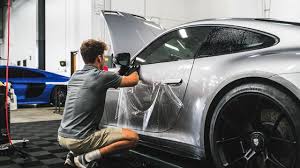
Questions to Ask a PPF Installer
- Which manufacturer and exact film product will be installed?
- Which panels and coverage boundaries are included?
- Will the installation use plotted patterns, bulk film, or a combination?
- How will edges, seams, sensors, trim, and complex body lines be handled?
- What preparation is included before installation?
- How are previous paintwork and existing defects documented?
- What does the manufacturer’s warranty cover?
- Does the shop provide separate workmanship coverage?
- What care is required immediately after installation?
- Is a post-installation inspection recommended?
- Who should you contact if an edge, stain, impact, or other concern develops?
Red Flags to Watch For
Be cautious when an installer:
- Will not identify the exact film being quoted
- Provides no written description of coverage
- Cannot explain preparation or edge treatment
- Promises that PPF prevents every chip or scratch
- Suggests film can hide serious existing paint defects
- Does not inspect or document previous paintwork
- Cannot explain the difference between material and workmanship coverage
- Provides no aftercare instructions or support process
The Bottom Line
When searching for paint protection film installers near you, do not choose based on price or brand recognition alone.
Compare the complete system:
- Film identity
- Vehicle preparation
- Coverage boundaries
- Installation method
- Fitment and edge treatment
- Condition documentation
- Warranty support
- Long-term service
The right installer helps ensure that the selected film and coverage package are appropriate for the vehicle—and that the finished installation performs as intended.
Compare PPF Options With APS
APS can evaluate your vehicle, explain available films and coverage packages, and provide a written recommendation based on how and where you drive.
Automotive Protection Services
3170 Draper Drive, Unit #8
Fairfax, VA 22031
(703) 591-0900
Schedule a PPF Consultation Request a Quote Explore PPF Services
Understand Paint Protection Film Before You Choose
Explore the complete APS guide to paint protection film, including how modern PPF works, film construction, coverage options, professional installation, maintenance, aging, removal, warranties, cost, and long-term value.
Read the Complete PPF Guide