
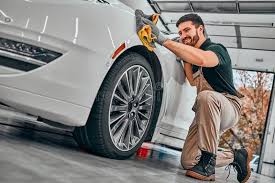
The Compound Interest of Professional Auto Detailing
Albert Einstein is often credited with calling compound interest the eighth wonder of the world.
Whether or not he actually said it, the principle is sound:
Small, consistent decisions can become surprisingly powerful over time.
Most people understand that concept when investing money.
Far fewer recognize that a similar principle applies to owning and maintaining a vehicle.
Professional detailing is one of the clearest examples.
Neglect Compounds, Too
Compounding does not always work in your favor.
Sometimes the small decisions accumulate in the wrong direction.
A layer of road film remains on the paint.
Tree sap sits for another week.
Brake dust stays embedded on a wheel.
A drink spill remains in the carpet.
Body oils and grime continue collecting on frequently touched interior surfaces.
None of those issues may seem especially significant by itself.
Together, they gradually change the condition of the entire vehicle.
Contamination becomes harder to remove. Stains become more established. Paint defects become more visible. Interior materials begin to look older than the vehicle’s mileage suggests they should.
Neglect compounds, too.
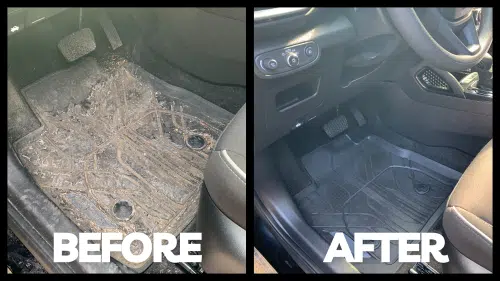
The Mathematics of Consistency
Imagine two identical vehicles purchased on the same day.
One receives regular, appropriate care.
The other is cleaned only when its condition becomes difficult to ignore.
During the first year, the difference may be surprisingly small.
After five years, it becomes easier to notice.
After ten years, the vehicles may present very differently—even if their mileage and mechanical histories are similar.
The difference was not created by one extraordinary detail.
It was created by dozens of ordinary decisions:
- Removing contamination before it became deeply embedded
- Cleaning spills before they became established stains
- Using suitable products on leather, vinyl, fabric, and plastic
- Washing the vehicle with methods that reduced avoidable scratches
- Inspecting paint before minor defects became more difficult to correct
- Maintaining protective products rather than waiting for complete failure
That is how compounding works.
Routine Care Makes Future Care More Manageable
Maintenance detailing does not merely improve how the vehicle looks today.
It can also make future care more manageable.
A regularly cleaned interior is usually easier to maintain than one requiring extensive stain and odor treatment.
Paint that is washed correctly and inspected periodically may require less aggressive correction than paint subjected to years of improper washing and embedded contamination.
Wheels cleaned before brake dust becomes heavily bonded are easier to maintain.
Protective products that are inspected and refreshed appropriately can continue performing without requiring a complete reset every time.
Regular care does not guarantee that every future service will be easier or less expensive. Accidents, spills, scratches, environmental exposure, and ordinary wear still happen.
But consistency generally provides more options than neglect.
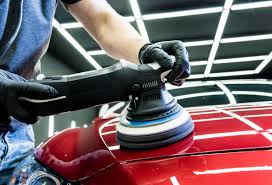
The Cost of Waiting Is Rarely Neutral
Many owners think postponing detailing simply delays the same expense until later.
Sometimes it does.
But waiting can also change the nature of the work:
- Light contamination can become more difficult to remove
- A fresh spill can become a persistent stain or odor
- Ordinary cleaning can become deep extraction
- Minor paint improvement can become multistage correction
- Neglected trim may require restoration rather than maintenance
- Bird droppings, insects, water minerals, or tree sap may etch or stain surfaces
Not every delayed detail causes permanent damage, and not every defect can be prevented. The larger lesson is that postponement is not always economically neutral.
Preventive options tend to be most useful before deterioration becomes severe.
Detailing Is Not the Same as Restoration
Professional detailing can improve and preserve many vehicle surfaces, but it has limits.
Detailing cannot always:
- Remove stains that have permanently altered the material
- Repair torn upholstery or cracked leather
- Replace missing clear coat
- Remove every deep scratch
- Reverse severe oxidation
- Eliminate odors embedded in inaccessible materials or contaminated components
- Make an older vehicle literally new again
An honest detailer should distinguish between cleaning, improvement, correction, protection, repair, and replacement.
The earlier an issue is addressed, the more likely it is that less aggressive options remain available.
Preserving More Than Resale Value
Detailing is often justified through resale value.
Condition can influence how a vehicle presents during a private sale, trade-in, lease return, or appraisal. However, professional detailing does not guarantee a specific increase in value or return every dollar spent.
There is another form of value that is harder to measure:
The enjoyment of driving a vehicle that still feels cared for.
The satisfaction of opening the door to a clean interior.
The comfort of knowing that old spills, dirt, and accumulated clutter are not becoming permanent occupants.
The confidence of arriving in a vehicle whose condition reflects the care you place into the rest of your life.
Economists might call those intangible benefits.
Owners simply call them worth it.
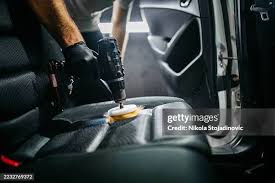
How Often Should a Vehicle Be Professionally Detailed?
There is no universal schedule for every owner.
The right frequency depends on:
- Annual mileage
- Children and pets
- Food and drinks consumed in the vehicle
- Outdoor or garage storage
- Work, sports, or recreational use
- Paint color and condition
- Existing ceramic coating, wax, sealant, or PPF
- How consistently the owner performs maintenance cleaning
A lightly used, garage-kept vehicle maintained carefully at home may need professional attention less frequently than a daily-driven family SUV transporting children, sports gear, and a dog.
The goal is not to follow an arbitrary calendar. It is to intervene before ordinary contamination becomes difficult deterioration.
Small Habits Create the Strongest Return
Professional detailing works best when supported by ordinary maintenance between visits.
Useful habits include:
- Remove spills promptly
- Do not allow bird droppings or tree sap to remain unnecessarily
- Use automotive wash products rather than household detergents
- Use clean wash media and microfiber towels
- Vacuum sand and grit before it becomes embedded
- Follow the care instructions for ceramic coating and PPF
- Use cleaning products appropriate for the actual interior material
- Have unusual stains or paint concerns evaluated before experimenting with aggressive products
The highest return often comes from preventing avoidable damage rather than correcting it afterward.
Part of the APS Protection Ecosystem
At Automotive Protection Services, detailing is more than a cosmetic cleaning service.
It is part of the APS Protection Ecosystem.
Professional detailing can support other vehicle-protection services by:
- Maintaining paint protected by ceramic coating
- Cleaning and inspecting surfaces protected by paint protection film
- Caring for interior materials exposed to sunlight through automotive glass
- Preparing paint before correction or long-term protection
- Helping owners notice damage or deterioration earlier
Each service has a different job.
Ceramic coating does not replace washing. PPF does not protect the interior. Window film does not clean leather or carpet. Detailing does not stop rock chips.
Thoughtful vehicle preservation comes from using the appropriate service for the appropriate risk.
The Best Investments Are Rarely Dramatic
People often imagine that preserving a vehicle requires one extraordinary decision.
In reality, it usually comes down to ordinary decisions made consistently.
A professional detail this season.
A proper wash next month.
A spill removed today instead of next year.
A little attention before neglect has time to grow.
No single visit preserves a vehicle forever. The value comes from a pattern of reasonable care.
Compound interest is not merely a financial principle.
It is one of the most useful ways to think about long-term vehicle ownership.
Build a Detailing Routine That Compounds in Your Favor
APS provides professional interior, exterior, and complete detailing for cars, trucks, and SUVs throughout Fairfax and Northern Virginia. We can recommend an appropriate service based on your vehicle’s condition, use, protective products, and ownership goals.
Explore Detailing Services Schedule a Detail
Automotive Protection Services
3170 Draper Drive, Unit #8, Fairfax, VA 22031
(703) 591-0900