
Undercoating and Rustproofing in Fairfax, VA: What Drivers Should Know
Rust usually starts where you cannot see it.
Frame rails, seams, welds, rocker panels, hidden cavities, and suspension mounting points take constant abuse from water, road grime, salt, brine, and winter road treatments.
If you are searching for professional undercoating in Fairfax, VA, the important question is not simply whether your vehicle needs protection.
The real question is what kind of protection makes sense for its age, condition, use, and how long you plan to keep it.
For a detailed explanation of products, application methods, vulnerable areas, costs, and maintenance, read the APS guide to automotive undercoating and rustproofing.
Why Undercoating Matters in Northern Virginia
Northern Virginia may not feel like the Rust Belt, but local vehicles still encounter plenty of conditions that encourage corrosion.
- Winter road salt and liquid brine
- Rain, humidity, and persistent moisture
- Road debris and exposed metal
- Mud and contamination trapped around seams
- Older frames, fasteners, and suspension components
- Work trucks and daily drivers used throughout the year
Once corrosion begins, it can spread into seams, edges, brackets, and structural areas where treatment becomes more involved and repairs may become more expensive.
Undercoating vs. Rustproofing: What Is the Difference?
People often use the terms interchangeably, but they can describe different parts of a complete corrosion-protection system.
Undercoating generally refers to protection applied to exposed surfaces beneath the vehicle.
Rustproofing is a broader term. It can include underbody protection, cavity treatment, seam protection, and products applied inside hidden areas where moisture can collect.
That is why APS evaluates the vehicle before recommending a treatment. A newer vehicle may be suitable for straightforward preventive protection. An older vehicle may require cleaning, surface preparation, corrosion treatment, or a more involved rust-recovery process before protective materials are applied.
The Best Time to Protect a Vehicle
The ideal time to undercoat a vehicle is generally when it is new or still clean underneath.
At that stage, the goal is prevention: protecting suitable surfaces and cavities before repeated exposure creates established corrosion.
For used vehicles, the process changes. The underside may already have surface rust, loose scale, damaged factory coatings, or accumulated contamination that must be evaluated before protection is applied.
A qualified shop should understand both preventive undercoating and existing corrosion—not simply spray material over whatever is already there.
Why Preparation Matters
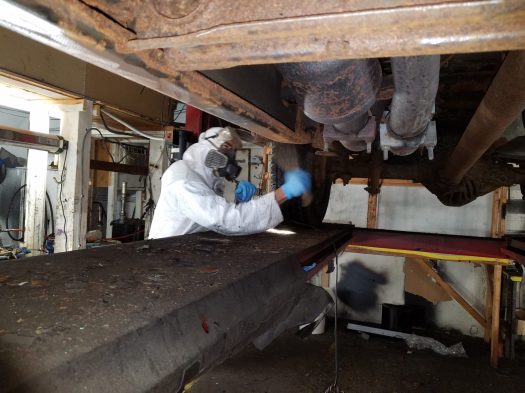
The performance of an undercoating system depends heavily on the condition and preparation of the surfaces being treated.
If loose scale, dirt, contamination, or moisture is trapped beneath an unsuitable coating, the result can be disappointing. Proper preparation helps the selected material perform as intended and ensures attention is given to the areas that need it.
Depending on the vehicle and treatment system, preparation may include:
- Inspection of the underbody, frame, seams, and cavities
- Cleaning and surface preparation
- Removal of loose rust or scale where appropriate
- Treatment of manageable existing corrosion
- Targeted underbody protection
- Cavity protection for seams and hidden areas
- Careful masking or avoidance of components that should not be coated
This is where product knowledge, application experience, and professional judgment matter.
What About Oil Sprays, WoolWax, Fluid Film, and Other Options?
Drivers frequently compare oil-based sprays, lanolin-based products, cavity waxes, and more durable professional underbody coatings.
Each approach has different characteristics.
Some products remain soft and creep into seams. Others cure into a more durable protective film. Some require regular inspection and periodic reapplication, while others are designed as part of a longer-term system that may use separate materials for exposed surfaces and enclosed cavities.
The appropriate choice depends on:
- The vehicle’s age and existing condition
- Whether corrosion has already begun
- The construction of the underbody and frame
- How the vehicle is used
- How long the owner plans to keep it
- The owner’s preferred maintenance schedule
No single product is automatically the best choice for every vehicle.
New Vehicle vs. Older Vehicle: Two Different Conversations
A new truck and a ten-year-old truck should not automatically receive the same treatment.
For a newer qualifying vehicle, APS can concentrate on protecting clean, suitable surfaces before corrosion gains a foothold.
For an older vehicle—especially one with visible rust—the process may begin with a rust-remediation inspection, cleaning, and preparation before undercoating is considered.
That distinction matters because the goal is not to hide corrosion. The goal is to evaluate it honestly, slow further deterioration where practical, and protect suitable vulnerable areas.
Undercoating cannot replace metal that has already been lost or restore a structurally compromised component. Severe damage may require mechanical repair or replacement before protective treatment makes sense.
Where Undercoating Fits Into the APS Protection Ecosystem
Undercoating protects what most owners rarely see, but it is only one part of long-term vehicle protection.
Depending on the vehicle and the owner’s priorities, undercoating may be combined with:
- Spray-in bedliner for durable truck-bed protection
- Automotive window tint for heat rejection, UV protection, comfort, and privacy
- Ceramic coating for painted-surface protection and easier maintenance
- Paint protection film for high-impact painted areas
The APS Protection Ecosystem brings these services together around the vehicle’s condition, use, and the owner’s long-term plans.
Ready to Protect Your Vehicle?
APS can inspect your car, truck, or SUV and recommend an undercoating or rustproofing approach based on its current condition.
Newer vehicles may be suitable for preventive undercoating. Older vehicles may require additional preparation or rust remediation before protection is applied.
Automotive Protection Services
3170 Draper Drive, Unit #8
Fairfax, VA 22031
(703) 591-0900
Related Posts
Stealth Hitch Installation in Fairfax VA | Reliable Capability When You Need It
[siteorigin_widget class="WP_Widget_Custom_HTML"][/siteorigin_widget]

What Are the Best Ceramic Coatings for Cars?
Ceramic coatings are one of the most effective products for…

How Ceramic Coating Can Protect Your Vehicle in the Fall
The fall season in Fairfax and other parts of Northern…