
DIY Research vs Professional Vehicle Protection: What You Need to Know Before Booking
There has never been more information available about protecting a vehicle.
You can watch installation videos.
Read forums.
Compare product specifications.
Ask AI.
Study reviews.
Search for the “best” film, coating, undercoating or bedliner.
And after several hours of research, you may know considerably more than you did when you started.
You may also be more confused.
That's because automotive protection decisions usually have two parts:
Understanding the product.
And understanding whether that product makes sense for your vehicle, your expectations and the way you use it.
DIY research is extremely useful for the first part.
Professional experience becomes especially useful for the second.

Research Before You Book Anything
We strongly believe vehicle owners should understand what they're buying.
If you're considering window tint, you should understand the difference between darkness and heat rejection.
If you're researching PPF, you should understand what parts of the vehicle different coverage packages actually protect.
If you're considering ceramic coating, you should understand that it isn't a substitute for paint protection film.
If you're researching undercoating, you should understand that different products and application methods solve different corrosion-protection problems.
If you're considering detailing, you should understand the difference between cleaning, decontamination, correction and protection.
And if you're buying a spray-in bedliner, you should know that preparation matters just as much as what the finished coating looks like.
The customer who understands those basics is usually much better equipped to ask useful questions before booking.
What DIY Research Is Really Good At
Online research can be excellent for learning terminology and comparing broad categories.
It can help answer questions such as:
- What does this product actually do?
- What doesn't it do?
- What are the major types?
- What problems is it designed to solve?
- What does installation generally involve?
- What maintenance is required afterward?
- What questions should I ask an installer?
That's exactly why Automotive Protection Services has built detailed buyer's guides rather than expecting customers to make decisions from a short service-page sales pitch.
Our current guide library includes:
- Complete Automotive Window Film Guide
- Complete Paint Protection Film Guide
- Complete Automotive Ceramic Coating Guide
- Complete Undercoating & Rustproofing Guide
- Complete Professional Automotive Detailing Guide
- Complete Spray-In Bedliner Guide
Where Online Research Starts to Break Down
The internet is very good at answering general questions.
Vehicles are specific.
Your paint condition is specific.
Your commute is specific.
Your ownership plans are specific.
Your truck use is specific.
Your tolerance for maintenance is specific.
Your expectations are specific.
That's where universal answers start becoming less useful.
“What's the best ceramic coating?” isn't really a complete question.
Best for what?
Maximum gloss?
Easy maintenance?
A daily driver parked outdoors?
A garage-kept weekend car?
Someone who enjoys hand washing every Saturday?
Someone who wants the least possible maintenance?
The right answer depends on the owner as much as the product.

Start With the Problem, Not the Product
This may be the single most useful principle in automotive protection.
Don't begin with:
“Which coating should I buy?”
Begin with:
“What am I trying to prevent?”
Rock chips?
Heat?
UV exposure?
Corrosion?
Paint contamination?
Interior wear?
Truck-bed damage?
Once the problem is clear, the list of sensible solutions becomes much shorter.
Window Tint: Research the Numbers, Then Talk About the Experience
Window film is a great example of where online research helps—but only to a point.
You can research:
- visible light transmission
- UV rejection
- infrared rejection
- film construction
- ceramic versus dyed films
- Virginia tint regulations
Those things matter.
But they don't completely answer questions such as:
How dark will this actually feel at night?
How much privacy do I really want?
Do I care more about appearance or heat rejection?
What film combination makes sense across different windows?
That's where discussing your actual vehicle and priorities with an installer becomes useful.
Our Automotive Window Film Guide is the best place to understand the technology before that conversation.
When you're ready to talk installation, visit our professional window tinting service page.
PPF: The Product Matters, but Coverage Strategy Matters Too
It's easy to spend hours researching paint protection film brands.
Film quality matters.
But the more important question may be:
Where does your vehicle actually need protection?
A driver who spends thousands of highway miles each year has a different risk profile from someone driving a weekend car locally.
A low sports car may encounter road debris differently from a tall SUV.
A truck may have rocker-panel exposure that deserves particular attention.
And the difference between partial-front, full-front and more extensive PPF coverage can matter more than tiny differences between two high-quality films.
Our Complete Paint Protection Film Guide explains the technology and coverage choices in depth.
For professional installation options, visit our PPF service page.
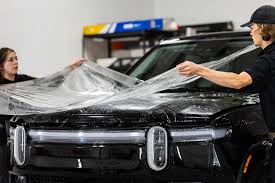
Installation Quality Is Hard to Compare From a Product Specification
This is one of the biggest limitations of DIY research.
A product specification can tell you about the material.
It can't tell you how carefully someone will install it.
For PPF, that may include:
- surface preparation
- pattern placement
- edge finishing
- alignment
- handling of complex panels
- contamination control
For window tint, it includes film handling, cleanliness, trimming and finishing.
For ceramic coating, it includes paint preparation and application control.
For undercoating, it includes access to the places that actually need protection.
For bedliners, it includes masking and surface preparation.
The material and the workmanship are not separate purchases.
Together, they are the finished result.
Ceramic Coating: The Bottle Is Only Part of the Job
Ceramic coating research often becomes extremely product-focused.
SiO2 percentages.
Hardness claims.
Layer counts.
Years of advertised durability.
Those details can be useful.
But the coating is applied to whatever surface exists underneath it.
If the paint needs decontamination or correction, simply applying an expensive coating doesn't make those defects disappear.
Preparation is part of the finished product.
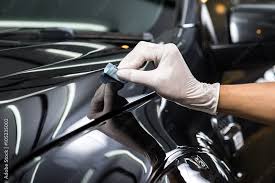
That's why a professional ceramic-coating conversation should include the condition of the paint before anyone starts discussing coating packages.
Our Automotive Ceramic Coating Guide explains coating chemistry, preparation, maintenance and realistic expectations.
For professional installation, visit our Ceramic Coating service page.
Undercoating: “What Product Do You Use?” Isn't Enough
Undercoating may be the category where internet research becomes confusing fastest.
You'll encounter:
- wax-based products
- lanolin-based products
- oil treatments
- rubberized coatings
- cavity protection
- corrosion inhibitors
- do-it-yourself sprays
Then you'll find enthusiasts arguing passionately for one approach over another.
The better question is:
What areas of the vehicle need protection, what condition are they currently in, and how will the product behave there?
Protecting exposed underbody surfaces isn't identical to treating an enclosed cavity.
Protecting a brand-new truck isn't identical to treating a ten-year-old vehicle with existing corrosion.
Our Complete Undercoating & Rustproofing Guide explains the different systems and terminology.
For a vehicle-specific assessment, visit our Undercoating & Rustproofing service page.
Detailing: The Word Itself Doesn't Tell You What's Included
“Detailing” can describe dramatically different services.
One business may use the term for a thorough cleaning.
Another may include decontamination, machine polishing and protection.
Another may focus primarily on the interior.
That makes price comparisons particularly difficult.
Before comparing two detailing quotes, ask whether you're actually comparing the same work.
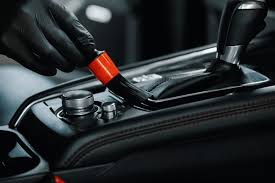
Our Professional Automotive Detailing Guide explains the work in much greater detail.
For APS detailing options in Fairfax, visit our Car Detailing service page.
Spray-In Bedliners: The Finished Surface Hides Most of the Important Work
A finished spray-in bedliner looks relatively straightforward.
A textured protective coating covers the truck bed.
But most of the quality is determined before the spraying begins.
Preparation.
Cleaning.
Masking.
Surface abrasion.
Coverage.
Application technique.
Curing.
Those are difficult things to judge from a photograph of a finished truck.
That's why understanding the installation process is so valuable before choosing an installer.
Our Complete Spray-In Bedliner Guide explains what goes into a professional installation.
For service information, visit our Spray-In Bedliner service page.
The Lowest Price Is Easy to Compare. The Finished Result Isn't.
Price is concrete.
It's easy to put two numbers side by side.
But professional automotive protection isn't simply a commodity purchase.
Two shops can quote the same category of service while proposing meaningfully different:
- products
- coverage
- preparation
- installation procedures
- warranties
- maintenance expectations
- finished results
The goal isn't automatically to choose the most expensive option.
It's to understand what each quote actually includes.
Questions Worth Asking Before You Book
Instead of asking only, “How much?” consider asking:
- What exactly is included?
- What preparation happens before installation?
- What problem is this product intended to solve?
- What won't it protect against?
- What maintenance will it require?
- How long should I realistically expect it to last?
- What warranty applies?
- What happens if the vehicle already has damage?
- Is there a less expensive option that would meet my actual goal?
- Is there a more appropriate service for the problem I'm trying to solve?
A good professional should be comfortable answering those questions.
You Don't Need to Become an Expert
This is the other side of the research equation.
You absolutely should understand what you're buying.
But you don't need to spend forty hours learning to become a window-film installer, PPF technician, paint-correction specialist or corrosion expert before booking an appointment.
The purpose of research is to make you an informed customer.
Not to transfer the entire burden of professional judgment onto you.
Learn enough to understand the technology.
Learn enough to recognize unrealistic promises.
Learn enough to ask intelligent questions.
Then find someone whose answers make sense.
Research the Category. Discuss the Vehicle.
That's probably the simplest way to divide the work.
DIY research should help you understand the category.
A professional consultation should help you apply that knowledge to your particular vehicle.
The two aren't competitors.
They're complements.
That's one of the reasons we've created the APS guide library.
You can research as much or as little as you want before ever contacting us:
- Automotive Window Film Guide
- Paint Protection Film Guide
- Automotive Ceramic Coating Guide
- Undercoating & Rustproofing Guide
- Professional Automotive Detailing Guide
- Spray-In Bedliner Guide
Then, when you're ready to book, the conversation doesn't have to begin with “What is this?”
It can begin with the much more useful question:
“Here's my vehicle. Here's how I use it. Here's what I'm trying to protect. What makes sense?”
That's a much better place to start.