
What Actually Damages Cars in Northern Virginia?
You don't have to abuse a vehicle to damage it.
You can wash it regularly.
Park it carefully.
Keep up with the maintenance.
Never take it off-road.
And still watch the paint, underside, interior and other surfaces slowly deteriorate.
That's because much of the damage vehicles experience isn't caused by neglect.
It's caused by driving them.
And Northern Virginia gives vehicles a particularly interesting combination of things to deal with: winter road treatments, summer heat, UV exposure, traffic, construction, road debris, pollen, moisture and thousands upon thousands of ordinary commuting miles.
None of those things sounds particularly dramatic.
But vehicle damage is usually cumulative.
Understanding what actually causes it makes deciding what — if anything — you should protect considerably easier.
1. Winter Salt and Brine Attack the Parts You Rarely See
Let's start underneath the vehicle.
When winter weather threatens Northern Virginia, road crews treat roads to improve traction and prevent ice.
That's good for getting around.
It's considerably less helpful for the steel underneath your vehicle.
Salt, brine, moisture and road grime are thrown onto the underbody as you drive. They reach seams, welds, suspension components, frame areas and enclosed spaces that most owners rarely inspect.
Then the weather changes.
The vehicle gets wet.
It dries.
It gets wet again.
Another winter comes.
And the process repeats.
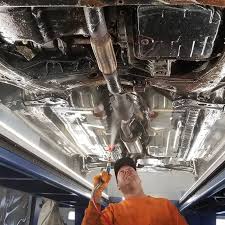
Corrosion is particularly frustrating because by the time an owner notices rust from above the vehicle, the process may have been developing underneath for years.
That's why rust prevention is fundamentally different from cosmetic repair.
The goal is to interfere with the conditions that allow corrosion to develop before corrosion becomes the problem you're trying to solve.
If you're planning to keep a vehicle through multiple Northern Virginia winters, our Complete Guide to Automotive Undercoating & Rustproofing explains how modern corrosion protection works.
You can also visit our Undercoating & Rustproofing service page for professional protection in Fairfax.
2. Rocks and Road Debris Damage Paint One Impact at a Time
Northern Virginia has another enemy of automotive paint:
The vehicle in front of you.
Or, more accurately, whatever its tires throw into the air.
Small stones and road debris can strike your bumper, hood, mirrors, fenders and other exposed surfaces at highway speeds.
Construction activity adds another source of loose material and debris.
And anyone regularly traveling I-66, I-495, Route 50, Route 29, the Fairfax County Parkway or other heavily traveled Northern Virginia roads gets plenty of opportunities for impacts.
A tiny chip doesn't seem like much.
Neither does the next one.
But look closely at the front of a vehicle after several years of highway driving and those individual impacts start telling a story.

Why the Front of the Vehicle Takes So Much Abuse
Not every painted panel faces the same risk.
The leading surfaces of the vehicle encounter the road first.
That's why paint protection film packages often concentrate protection around:
- the front bumper
- the leading edge or full hood
- front fenders
- side mirrors
- rocker panels and other high-impact areas
Paint protection film provides a sacrificial physical layer between road debris and the vehicle's painted surface.
It doesn't make the car invincible.
It gives the impact something other than the factory paint to hit first.
Our Complete Paint Protection Film Guide explains the different coverage strategies and where PPF makes the most sense.
For installation options, visit our Paint Protection Film service page.
3. The Sun Is Damaging More Than Your Dashboard
Summer in Northern Virginia can be brutal inside a parked vehicle.
But heat is only part of the problem.
Solar exposure also means repeated ultraviolet exposure to:
- interior materials
- leather and upholstery
- plastics
- dash surfaces
- vehicle occupants
Then there's glare.
Anyone who has driven west in late-afternoon traffic knows exactly how uncomfortable that can become.
This is where automotive window film serves a purpose that has very little to do with simply making windows darker.
Modern automotive films can provide UV rejection and solar-energy management while improving cabin comfort.
And those benefits occur every time you drive the vehicle.
Our Complete Automotive Window Film Guide explains ceramic tint, heat rejection, UV protection, darkness and Virginia tint considerations.
For installation, visit our Window Tinting service page.
4. Your Paint Is Constantly Being Contaminated
A vehicle's paint doesn't live in a clean environment.
Think about what lands on it during a normal year:
- pollen
- bird droppings
- bug residue
- road grime
- dust
- tree sap
- winter contamination
- water spotting
- airborne environmental fallout
Some contaminants simply make the vehicle dirty.
Others become considerably more troublesome when they're allowed to remain on the surface.
And Northern Virginia's seasons ensure that the type of contamination changes throughout the year.
Spring brings pollen.
Summer brings heat, insects and intense sun.
Fall brings leaves, organic material and sap.
Winter brings road grime and salt.
Then spring arrives and we start over again.
Ceramic Coating Doesn't Stop Damage — It Changes the Surface
This distinction matters.
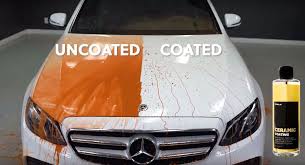
Ceramic coating is sometimes marketed as though it creates an impenetrable shell around the vehicle.
It doesn't.
It isn't a substitute for paint protection film when physical impact protection is the goal.
What a ceramic coating does particularly well is create a durable protective surface that helps resist environmental contamination and makes the vehicle easier to maintain.
That's valuable precisely because contamination isn't a once-a-year event.
It happens continuously.
Our Complete Automotive Ceramic Coating Guide explains what coatings actually do, how they're applied and where their limitations are.
For professional coating installation, visit our Ceramic Coating service page.
5. Washing Your Car Can Damage It Too
This one surprises people.
Cleaning a vehicle is supposed to protect it.
And done properly, it does.
But every time dirt is physically moved across paint, there's an opportunity to create microscopic scratches and swirl marks.
Improper wash mitts.
Dirty towels.
Poor wash technique.
Brush-style automatic car washes.
Even wiping dust from a dry vehicle can drag abrasive particles across the clear coat.
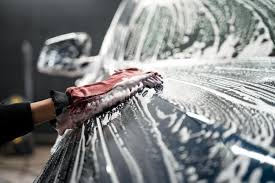
Many of the swirls visible on dark-colored vehicles aren't mysterious paint defects.
They're accumulated wash damage.
The irony is obvious:
You can damage a vehicle while trying to take care of it.
Professional Detailing Is Really About Managing Deterioration
Detailing is often treated as though its purpose is simply making a dirty vehicle look nice.
That's certainly part of it.
But professional detailing also deals with accumulated contamination and deterioration.
That can include safely cleaning surfaces, decontaminating paint, treating interior materials and correcting paint defects when appropriate.
Over years of ownership, those things matter.
Our Complete Guide to Professional Automotive Detailing explains what detailing actually includes and how it differs from simply washing a car.
For professional service, visit our Car Detailing service page.
6. Truck Beds Are Damaged by Doing Exactly What They're Designed to Do
A pickup truck creates an interesting contradiction.
You bought the bed to use it.
But using it damages it.
Tools slide.
Lumber moves.
Mulch gets shoveled.
Furniture gets loaded.
Bicycles get thrown in.
Equipment gets dragged across the floor.
The painted steel underneath all of that wasn't really designed to remain pristine through years of truck use.
That's why spray-in bedliners are less about keeping a truck bed beautiful and more about making the bed suitable for the job it's supposed to perform.
Our Complete Spray-In Bedliner Guide explains materials, preparation, installation, durability and how spray-in liners compare with other approaches.
For professional installation, visit our Spray-In Bedliner service page.
7. Northern Virginia Traffic Adds Mileage Without Adding Much Adventure
There's another factor that's easy to overlook:
time on the road.
A long commute means more exposure.
More road debris.
More sunlight through the glass.
More brake dust.
More bug impacts.
More opportunities for chips.
More time for contaminants to accumulate.
A vehicle doesn't care whether those 15,000 annual miles came from an epic cross-country road trip or sitting on I-66.
Exposure is exposure.
The Real Enemy Is Accumulation
This is the important part.
Most vehicles aren't ruined by one event.
They're changed by thousands of small ones.
One stone.
One winter.
One automatic wash.
One afternoon baking in the sun.
One load in the truck bed.
One month of contamination sitting on the paint.
None seems particularly important on its own.
But repeat those things for five, seven or ten years and you get a very different vehicle.
Different Damage Requires Different Protection
| What Causes the Damage? | What Is Being Damaged? | Protection to Consider |
|---|---|---|
| Salt, brine & moisture | Undercarriage, seams & cavities | Undercoating / Rustproofing |
| Rocks & road debris | Painted exterior surfaces | Paint Protection Film |
| UV, solar energy & glare | Cabin, occupants & interior materials | Window Film |
| Environmental contamination | Paint & exterior finish | Ceramic Coating |
| Dirt & improper maintenance | Paint, interior & trim | Professional Detailing |
| Cargo, tools & everyday use | Pickup bed | Spray-In Bedliner |
You Don't Necessarily Need Every Kind of Protection
This may be the most important point.
The answer isn't automatically:
“Protect everything.”
The better question is:
“What is my vehicle actually exposed to, what damage matters to me, and how long am I keeping it?”
A leased commuter has different priorities from a ten-year ownership vehicle.
A garage-kept weekend car has different risks from a daily driver parked outside.
A work truck carrying equipment has different needs from an SUV hauling kids.
A vehicle driven 25,000 highway miles a year has different exposure from one driven 5,000 miles around town.
Protection should follow the risk.
Start With the Damage You're Trying to Prevent
That's ultimately what automotive protection is about.
Not products.
Not coatings.
Not film.
Problems.
What problem are you trying to prevent?
If it's corrosion, investigate rustproofing.
If it's rock chips, investigate PPF.
If it's heat and UV exposure, investigate window film.
If it's contamination and difficult maintenance, investigate ceramic coating.
If it's accumulated wear and dirt, investigate professional detailing.
If it's damage from actually using your pickup, investigate a bedliner.
Once you understand the problem, choosing the appropriate protection becomes much easier.
APS Vehicle Protection Guides
Automotive Protection Services has been protecting vehicles in Fairfax and Northern Virginia since 1979. We've created detailed buyer's guides to help vehicle owners understand each protection category before deciding what makes sense for them.
- Automotive Window Film Guide
- Paint Protection Film Guide
- Automotive Ceramic Coating Guide
- Undercoating & Rustproofing Guide
- Professional Automotive Detailing Guide
- Spray-In Bedliner Guide
You don't have to protect everything.
But it helps to understand what's actually attacking your vehicle before you decide what deserves protection.
Related Posts
Undercoating Fairfax VA | Reliability Begins Where Rust Ends
[siteorigin_widget class="WP_Widget_Custom_HTML"][/siteorigin_widget]

How Window Tint Is Installed: Tools, Techniques & the Evolution of the Trade
How Window Tint Is Installed: Tools, Techniques & the Evolution…
Auto Detailing in Fairfax VA | The Compound Interest of Routine Care
[siteorigin_widget class="WP_Widget_Custom_HTML"][/siteorigin_widget]